Navigation
Explore the Archive
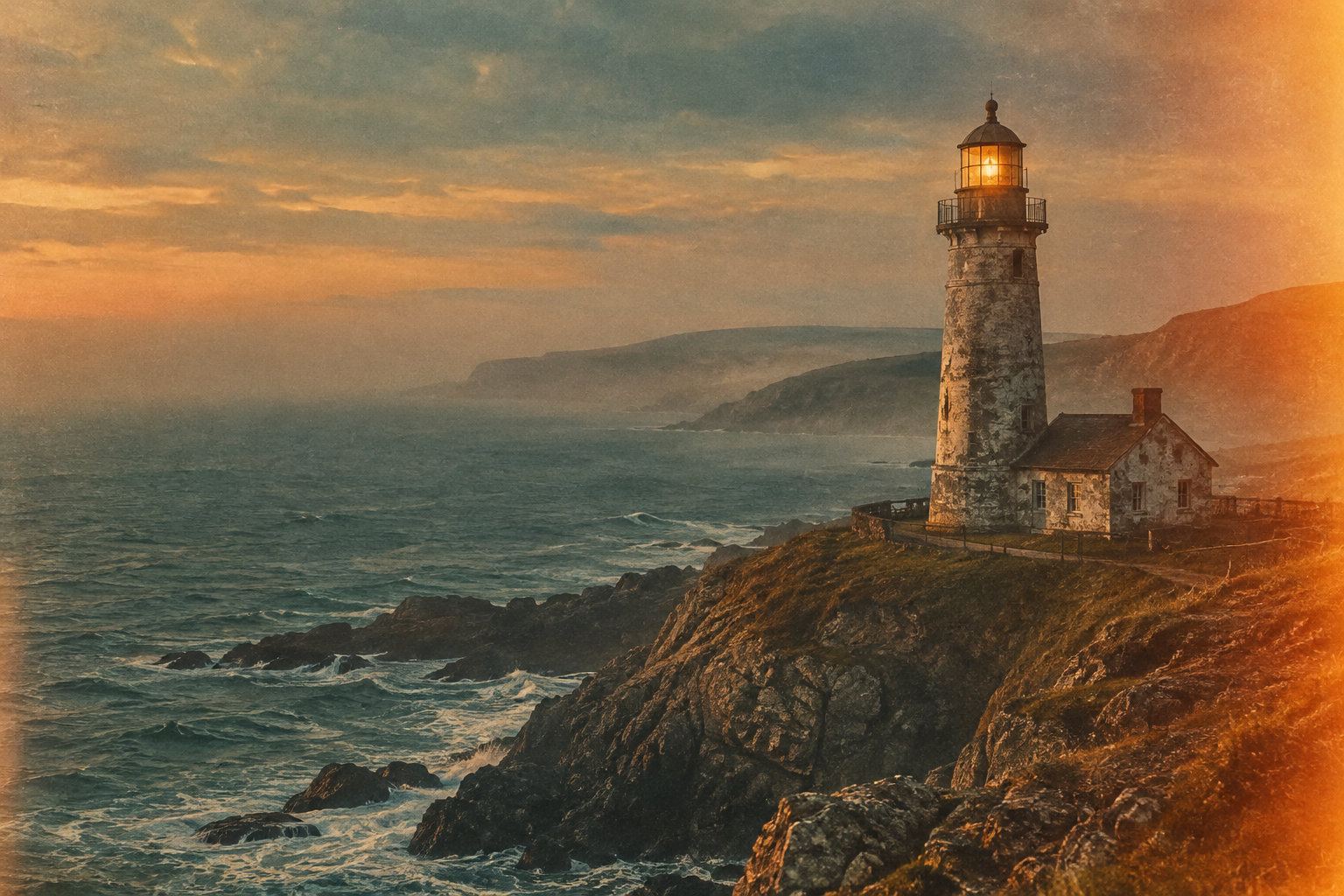
Solitary historic lighthouse on a rugged northern shoreline in low maritime haze near dusk, warm lantern glow, weathered stone, muted teal sea, and subtle golden-orange light leak with authentic warm film grain

Northern Coast Maritime History

Where the Coast Kept Watch

An evolving record of towers, keepers, and the changing work of guiding ships through northern waters.

Archive plate: northern headland beacon at dusk, weathered masonry and lantern glow under maritime haze.

History Timeline

A Coast Learned in Light,

Five eras trace how northern-coast lights shifted from improvised guidance to preserved landmarks, with each station shaped by weather, labor, and local memory.

  • First Shore Lights

    Early coastal navigation

    A flame against the dark

    Before permanent towers, exposed shore lights and simple beacons marked dangerous approaches when weather allowed.

    Open flames demanded constant tending and offered only a modest reach.
  • Masonry Towers

    Permanent stations

    Stone, brick, and endurance

    Purpose-built towers gave the coast lasting landmarks, with keeper dwellings and supply routes growing around them.

    Architecture answered wind, salt, isolation, and the need for a clear horizon.

  • The Lens Era

    Optical refinement

    Light gathered and sent seaward

    Precision lenses concentrated the lamp into a stronger, recognizable beam while clockwork mechanisms created distinct signals.

    Each station developed a visual character mariners could identify offshore.

  • Electrification

    Changing station work

    Brighter beams, new routines

    Electric equipment reduced some daily labor but introduced new systems to inspect, maintain, and protect from weather.

    The keeper’s craft shifted as technology entered the lantern room.

  • Preservation

    After automation

    From working station to shared record

    As automated systems replaced resident crews, communities turned toward conserving towers, photographs, tools, and memories.

    Preservation keeps both the structure and its human history visible.

Continue to Keeper Stories.
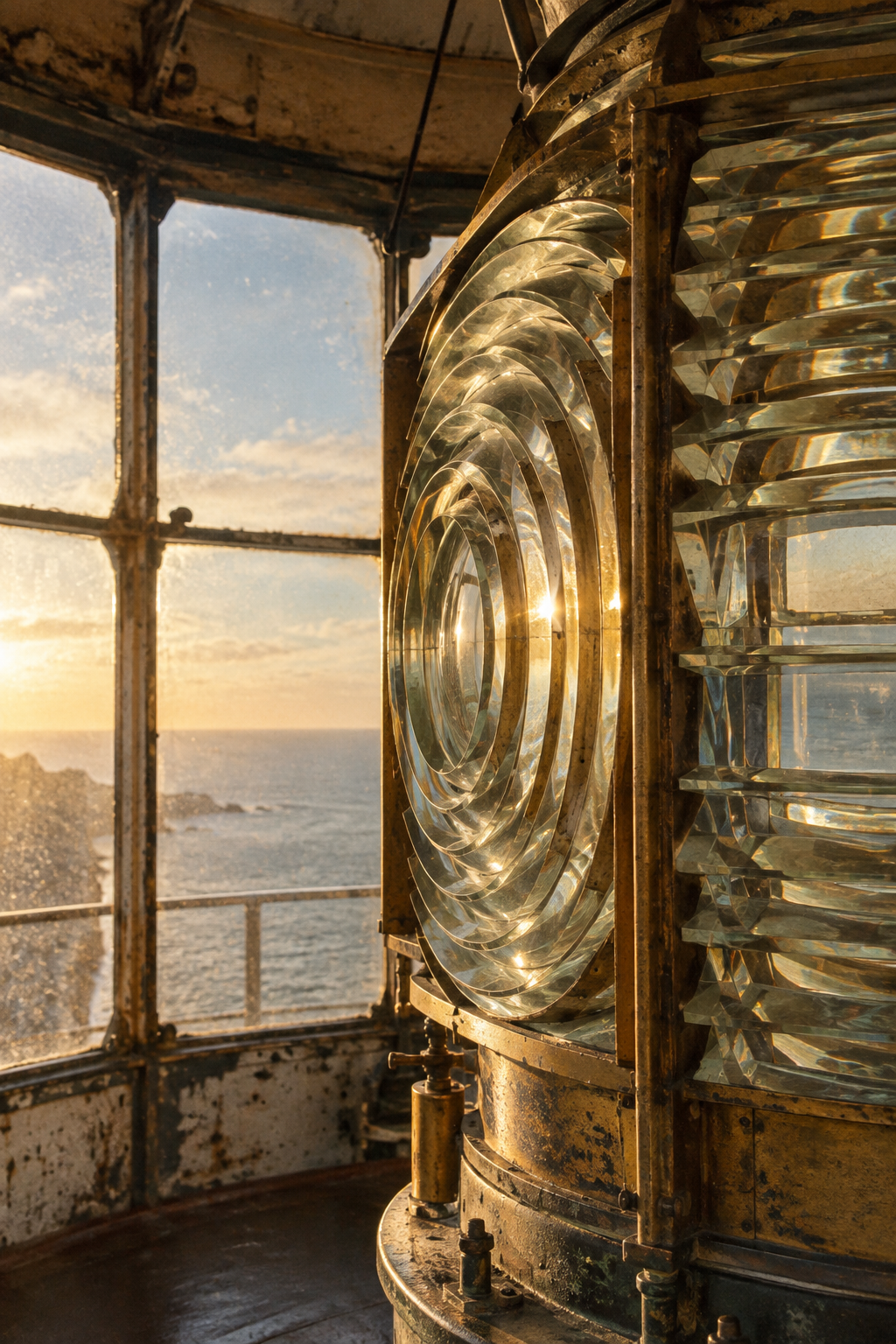
Historic Fresnel lens in brass housing inside a weathered lantern room with warm window light and subtle documentary film grain
Supporting study: lantern optics and materials

Keeper stories

Interpretive lives behind the northern coast beam

Read as interpretive profiles grounded in archival patterns of duty, weather, and family routine.

See Where They Served
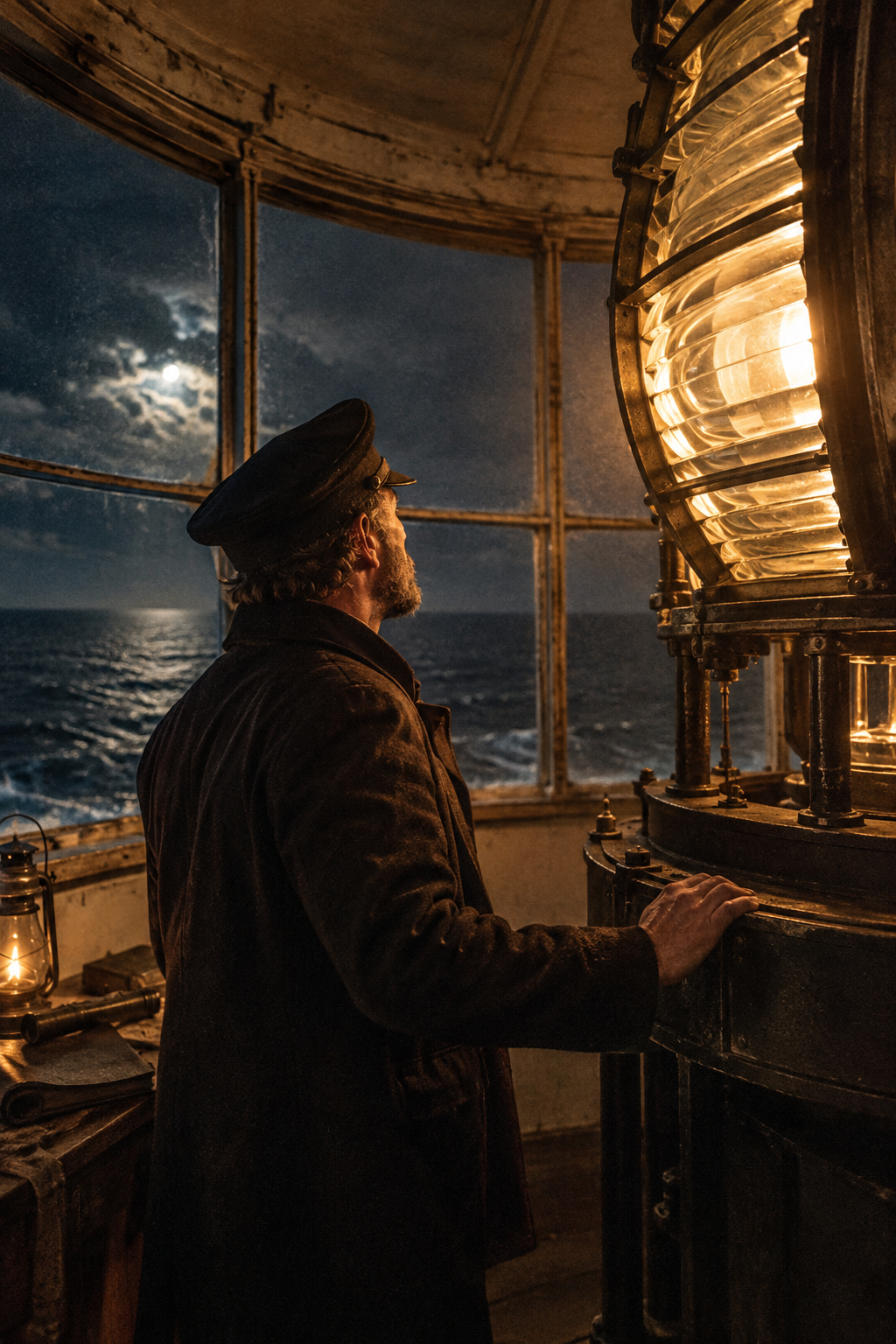
  • Keeper inspecting the lantern room at night
    Visual cue: Keeper inspecting the lantern room at night

    Interpretive entry

    The Night Watch

    Keeping the beam through weather

    A keeper’s night was measured in checks: flame, glass, mechanism, horizon—then the circuit began again.

    Context note

    An interpretive account based on common station routines, not a verbatim historic quotation.

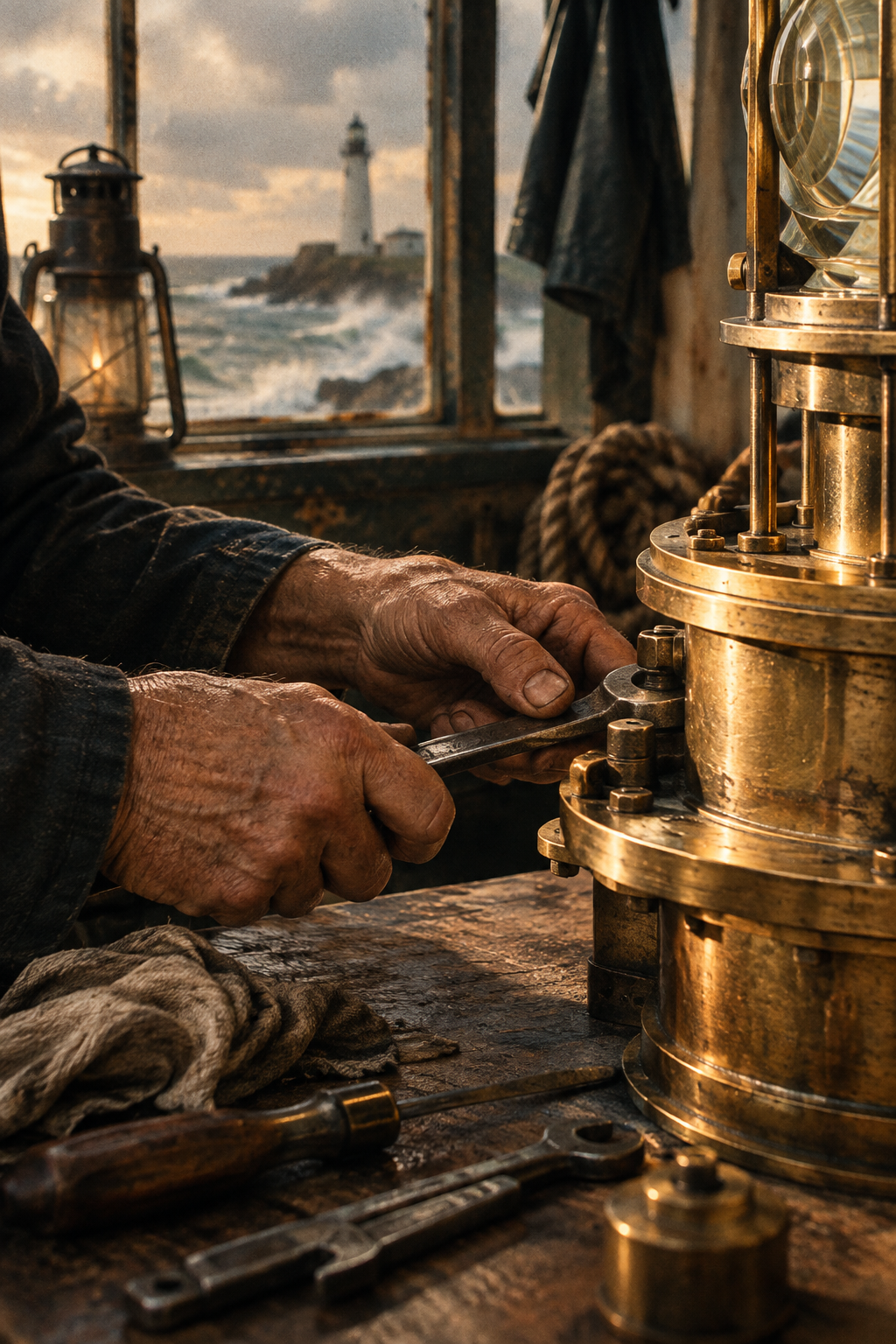
  • Weathered hands working on brass equipment
    Visual cue: Weathered hands working on brass equipment

    Interpretive entry

    Storm Maintenance

    Salt, wind, and urgent repair

    After heavy weather, every exposed fitting mattered. Small failures could become long nights of careful work.

    Context note

    An interpretive account of maintenance under severe coastal conditions.

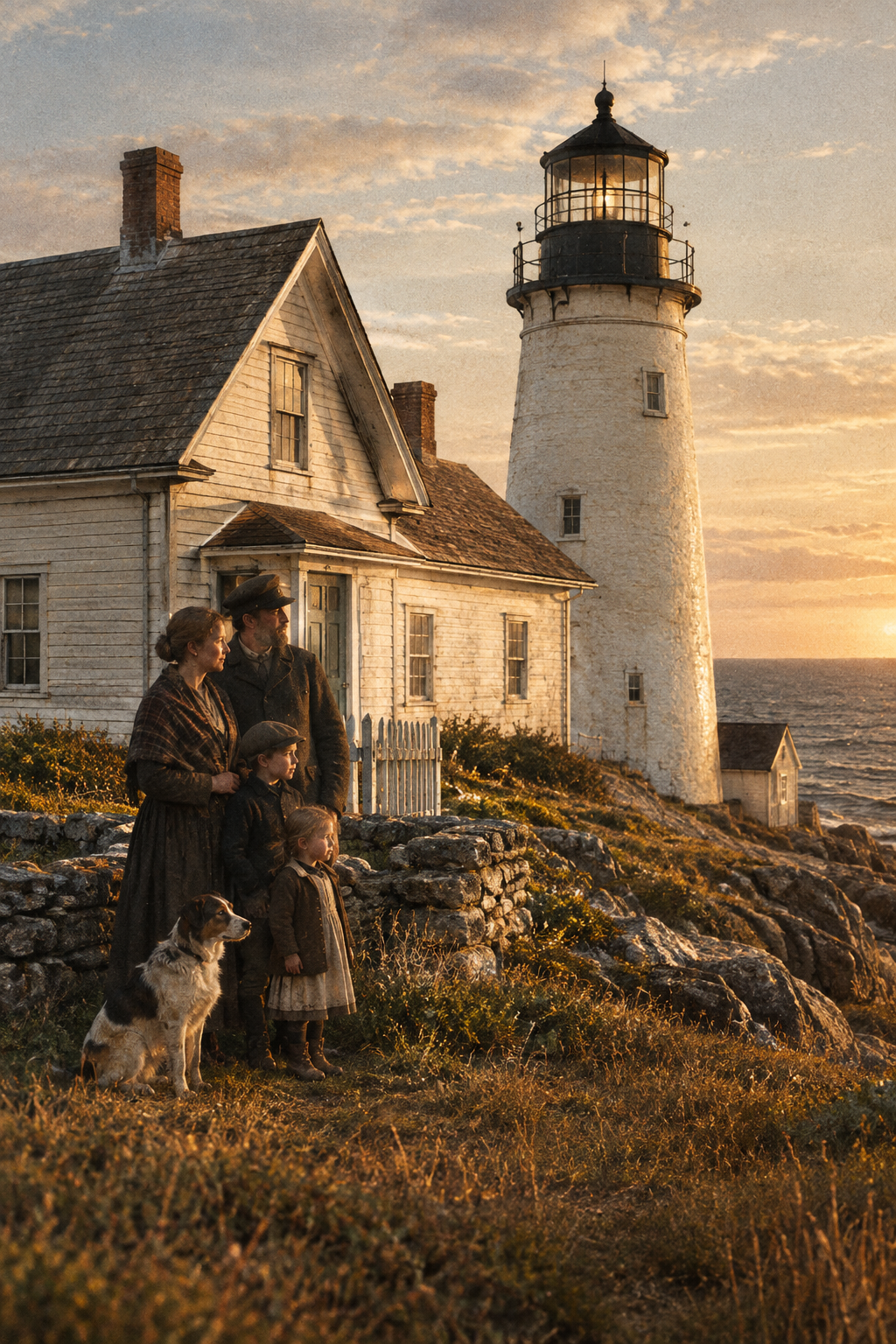
  • Keeper family dwelling beside the tower
    Visual cue: Keeper family dwelling beside the tower

    Interpretive entry

    Family at the Station

    A home at the edge of the sea

    Meals, lessons, supply days, and long absences unfolded beside the tower’s fixed rhythm.

    Context note

    An interpretive account of domestic life at an isolated light station.

Preserved towers guide

Towers That Still Mark the Coast

A map-inspired reading of the northern shoreline, linking preserved lights with their present settings and stewardship notes.